
By Elise Parker · Published · Updated
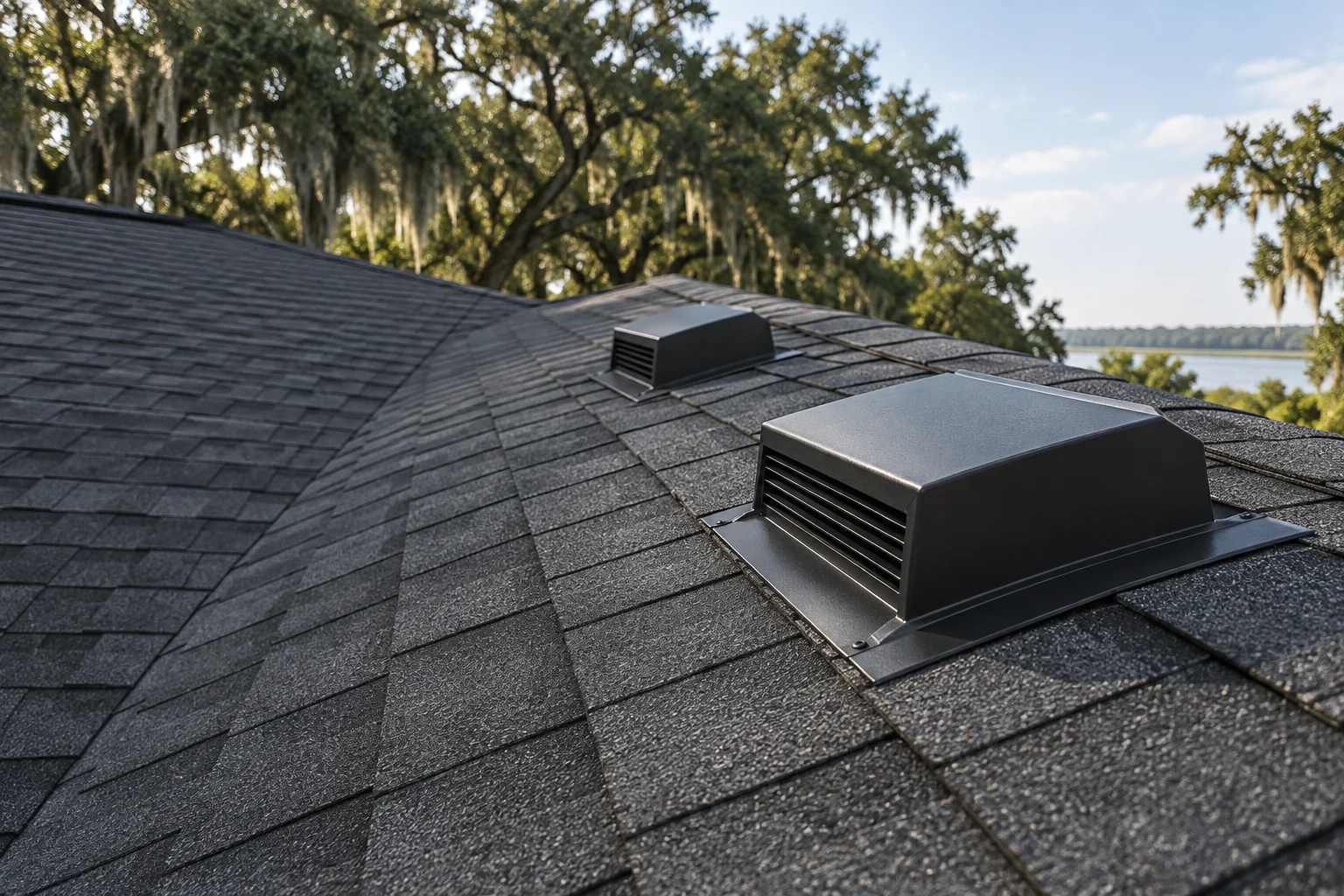
Roof ventilation can help manage heat and moisture in a vented attic, but it does not necessarily lower electric bills. Cooling performance also depends on insulation, air leaks, ducts and the air-conditioning system. For a Jacksonville home with hot rooms or rising bills, start by identifying the cause rather than adding vents on assumption.
How do intake and exhaust work together?
In a vented attic, air needs a path into the space and a path out. Soffit intake and upper-roof exhaust are common parts of that arrangement. Blocked intake, disconnected paths or unsuitable combinations can undermine it. The correct arrangement depends on the roof and attic construction.
An unvented or conditioned attic is a different assembly. Do not add openings simply because another house has them. A roof ventilation assessment should begin with the existing system and the problem you are trying to solve.
Will more ventilation lower the cooling bill?
There is no reliable savings percentage without assessing the home. A hot room may also reflect air leakage, inadequate insulation, leaking ducts or equipment issues. Ventilation work alone does not correct those causes.
ENERGY STAR’s attic guidance emphasizes air sealing and insulation as part of improving comfort and efficiency. Its published savings estimates concern those measures; they should not be presented as a promise for a roof vent installation.
What information helps diagnose the problem?
- Which rooms are uncomfortable and when the problem occurs.
- Whether the concern began after a reroof or other building work.
- Any visible ceiling staining or moisture observations.
- Available attic, insulation and HVAC reports.
- The location of existing vents, if known from records or ground-level observation.
Hawk Eye’s free residential roof inspection includes drone-assisted inspection and a photo report. A roof photograph does not reveal insulation coverage, duct leakage or every attic airflow restriction. Explain the comfort concern when scheduling so the assessment scope and any need for another specialist can be discussed.
Should ventilation be reviewed during replacement?
Yes—include it in the scope discussion for a roof replacement. Ask what will happen to existing vents, how the proposed components work together, and which installation requirements apply. Keep the ventilation decision connected to the roof assembly rather than treating it as an optional accessory selected only by appearance.
Contact Hawk Eye with your Jacksonville or First Coast address and the issue you have noticed. We can discuss the roofing side of the problem and the appropriate next step.
Ask us about your roof